Burdock Muldoon
Fantastic Beasts and Where to Find ThemBurdock Muldoon was the fourteenth-century Chief of the Wizards’ Council whose attempt to define magical creatures’ eligibility for political standing foundered at a summit he had called to bring them into discussion with wizards. His two-legged test turned classification into a question of legal rights and representation, but the meeting exposed the gap between a category assigned by authority and the willingness of other communities to take part. Afterward he gave up trying to integrate non-wizard members of the magical community into the Council, making his failed initiative an early episode in the book’s account of magical law and political membership.
Office and the question of status
Muldoon led the Wizards’ Council, the body that preceded the Ministry of Magic. His policy arose from a basic problem of magical governance: which creatures qualified as “beings”—and thus merited legal rights and a voice in governing the magical world—and which were to be classified as “beasts.” The distinction was not merely descriptive. It determined who could be recognized as a participant in public affairs, and it placed the authority to draw that boundary in the hands of wizard institutions.
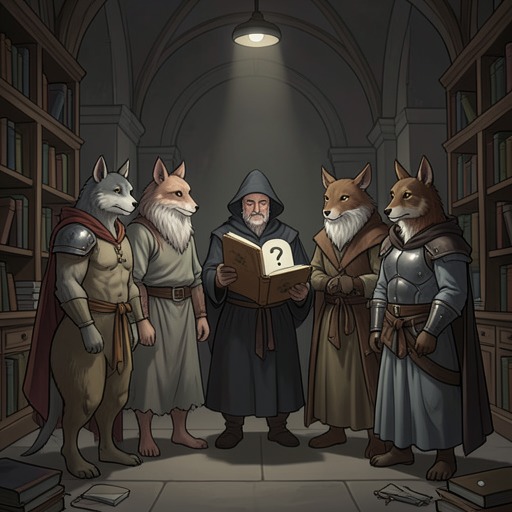
The book sets this political problem against the variety of nonhuman communities being classified. Centaurs, for example, have intelligence equal to that of wizards and Muggles, yet live in the wild, refuse clothing, and prefer separation from both groups. Their circumstances make clear why a single outward sign might fail to capture either a community’s capacities or its wishes. Muldoon’s test would attempt to settle eligibility by bodily form rather than by intelligence, customs, or consent.
The two-legged test and the summit
Muldoon decreed that any member of the magical community who walked on two legs would be granted the status of “being”; all others would remain “beasts.” The rule used an easily observed physical criterion to decide a matter with far-reaching consequences for standing and representation. It did not ask whether a creature wanted a role in wizard government, nor whether the Council’s proposed category reflected that creature’s own view of its place in the magical world.
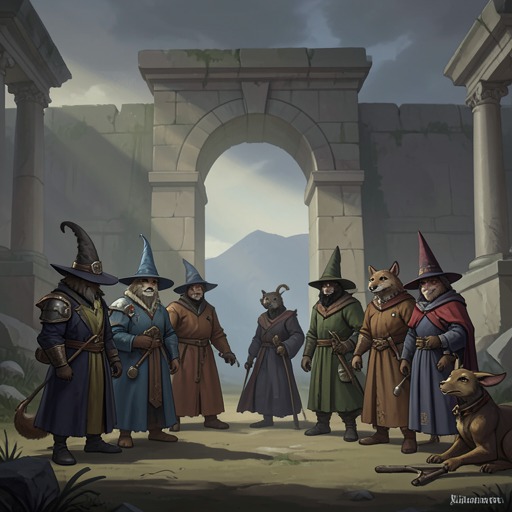
In what the account calls a spirit of friendship, Muldoon summoned all “beings” to meet with the wizards at a summit intended to discuss new magical laws. The gathering was therefore both a consultation and a practical test of his classification: those admitted as beings were expected to assemble as prospective participants in governance. His welcome could not, however, make a shared political project simply by declaring the invitees eligible for one.
The episode’s outcome revealed the weakness in that assumption. As the book concludes from the meeting, possessing two legs was no guarantee that a magical creature would take an interest in the affairs of wizard government. The failure was not just a problem of sorting bodies into categories; it was a problem of mistaking administrative inclusion for political engagement. A status conferred from above could not by itself establish common interests or secure participation.
Withdrawal and longer significance
Muldoon was embittered by the outcome and forswore further attempts to integrate non-wizard members of the magical community into the Wizards’ Council. His response marks a decisive retreat: rather than revise the test or find another way to accommodate differing communities, he abandoned the project of integration. The account does not present the summit as resolving the question of who deserves rights; it presents it as demonstrating how crude the early attempts at classification were.
Later history gives his initiative a place in a continuing argument over status and self-determination. His successor, Madame Elfrida Clagg, tried to redefine “beings” in the hope of establishing closer ties with other magical creatures. In 1811, the newly appointed Minister for Magic, Grogan Stump, decreed that a “being” was “any creature that has sufficient intelligence to understand the laws of the magical community and bear part of the responsibility in shaping those laws.” The book also notes that centaurs objected to being grouped with creatures such as hags and vampires and declared that they would manage their affairs separately from wizards; merpeople made the same request a year later. These later developments sharpen the lesson of Muldoon’s summit: official recognition, a criterion for membership, and a community’s own willingness to participate are distinct matters.
The summit thus serves as an early demonstration that magical classification is political as well as administrative. Muldoon’s two-legged rule offered a neat boundary, but the gathering exposed the limits of treating visible form as a substitute for shared governance. His failed attempt does not settle the dispute between “being” and “beast”; it opens a history in which the categories, the institutions applying them, and the claims of the communities classified remain in contention.